
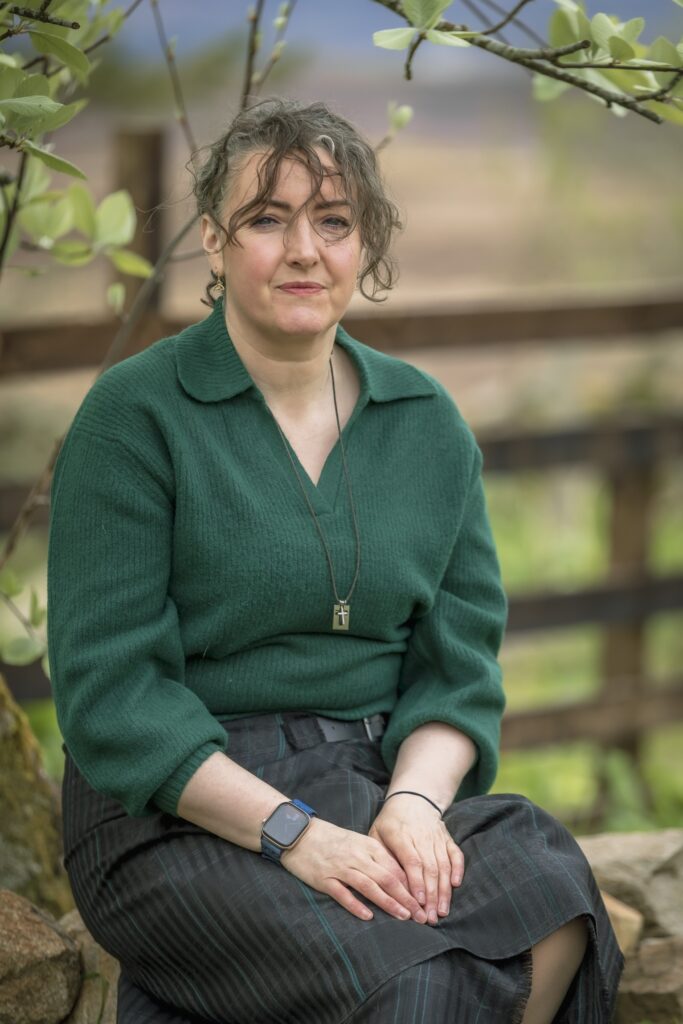
I was incredibly fortunate to begin my career as a storyline writer on Coronation Street in 1999 at 23 years old. It was a privilege not only because it was such a beloved show, but because my very first job placed me in the writers’ room, which is still the single best place to be.
I loved it then, and all these years later I still love it. Given the choice, you’ll usually find me in a room full of writers breaking story together, with all the blood, sweat, laughter and Haribo that comes with it.
Although I began as a writer, I soon discovered I also loved leading creative teams and shaping story across a show. That led me into producing, with my first producing role as Series Producer of Emmerdale. Since then, I’ve worked as a writer, story consultant and producer in the UK and abroad.
Along the way I’ve worked with many writers at every stage, from those just starting out to those with decades of experience behind them. I’ve helped originate stories and shows, develop scripts and support writers at many different stages of their careers.
I’ve also been lucky enough to build story departments where I would find new talent, including working with Singapore’s MediaCorp to help establish their first long-form English-language drama and train a new generation of writers. Tanglin was, for a while, Singapore’s longest-running drama until our second show, Kin, came along to top it.
What I’ve always loved most is helping writers discover what their stories really want to be and helping them find the confidence and clarity to tell them, regardless of the stresses they are under or the fears holding them back.
It is a vulnerable thing to put your writing out there, whether you’re a new writer or an experienced one. Most writers I know (the good ones anyway) never lose that feeling of vulnerability. That’s because there is something deeply therapeutic and meaningful about telling a story, especially one that has a personal significance to you. But unlike a safe and trusted therapy session, the creative industry can be tough and judgemental. I have huge respect for writers who speak from the heart and want to do all I can to help them succeed by being the first safe and trusted first audience for their work and helping them build the resilience to take it out into the industry.
When writing simply fulfilling the five act structure rules is not enough. Understanding the five-act structure helps build a solid script at a certain point in the process, because it is an editorial tool. But it doesn’t help with the blank page, help you find out what your script is about or what you have to say. What you have to say is integral to your voice, and that’s what makes you distinctive. It takes time to find your voice, and courage to express it.
The writer’s path is not a linear one. It’s easy to think as you start out that once you are a working writer and being paid for it, everything will be okay. But I’ve seen many working writers experience a crisis when their mortgage payment or paying their bills becomes dependent on whether their script is accepted by a producer. Those real-world pressures totally change your relationship to what you write, and your confidence can falter.
At every stage of your writing path, personal challenges can arise. Great, and consistent, writing rarely emerges from craft alone. It is a combination of craft and self-actualisation. Writers do their best work when they feel supported, when they can play with ideas, and when they have the confidence to trust their own voice.
Early in my career I knew I could help a writer on the page, but I also saw the limits of that when personal challenges were in the way. For example, I could help someone craft a perfectly written pitch but I didn’t know how to help them have the confidence to deliver it well when in an important meeting. I needed a solution and found it in Hypno-CBT.
It was back in 2006, while working as Series Producer on Emmerdale, that I first sought out hypnotherapy to help me with public speaking. I had worked my way up to Series Producer from Story Editor with many personal confidence hurdles along the way, such as at one point nearly being denied a promotion because I was told I “didn’t have the personality to be a producer”. At that point I sought out therapy and voice coaching to help me express myself and find resilience, but it was when I was Series Producer that I finally found hypnotherapy.
I sought out hypnotherapy because I was struggling when chairing large meetings with the cast, the crew or the ITV bosses. I could chair a large meeting with the writers, my comfort zone talking stories, but the other situations left me with a knot in my stomach and tripping over my words with a dry mouth. I had to do better.
I was a little scared of hypnotherapy, thanks to all the cultural misconceptions we storytellers love to write for a good yarn, but it was relaxing, and I immediately connected with it, not least because it works within our imaginary mindset.
I was amazed by the difference the hypnotherapy made. Within weeks I found I could chair large meetings without having a knot in my stomach and do pitch meetings to the bosses with more ease. A change that lasted.
So, years later, now training writers and realising I had a gap in my skillset, I thought back to how I had worked on my personal confidence over the years. Having once been a shy, insecure creative who went on to build a successful career, I knew it was possible to work through struggles and thrive. I just needed more training to be able to take writers on a similar journey.
I also wanted to improve my offering as a story or script consultant. I knew I could help a writer make one script better but for a true return on their investment, I wondered how I could make working on that one script evolve the writer more holistically, so they could take the growth they experienced forward into all their work and into any creative pursuit with others.
That’s when I came across the Hypno-CBT course from The UK College of Hypnosis and Hypnotherapy. I watched a webinar with the incredible Mark Davis and it was like a lightening strike, this was my answer. I signed up and have spent the last few years gaining my diploma alongside my television work.
Writer’s Intention emerged. Now through my editorial experience and my training in Hypno-CBT, I work with writers on their scripts and ideas, and on the challenges that can hold them back, whether that’s confidence, creative blocks, pitching, or the pressures of working in a demanding industry.
I want to use everything I’ve learned to help make your journey smoother. The stories you want to tell matter and it’s time to stop being held back.
If you’re looking for support with your writing or with the challenges that come with it I’d love to work with you. You can find out more about working together here